


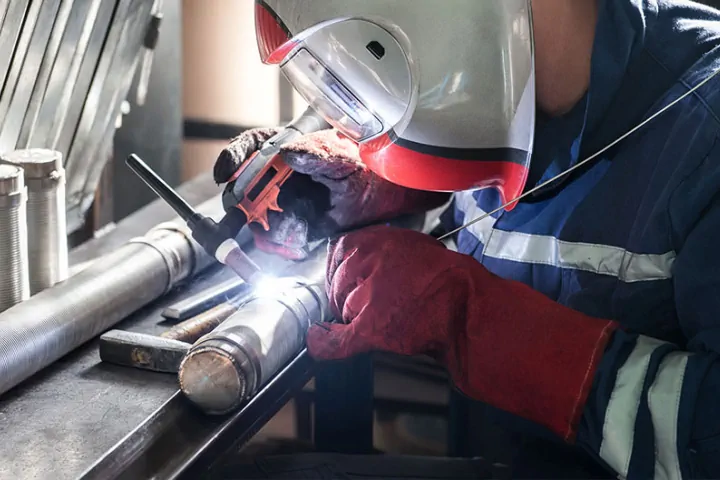
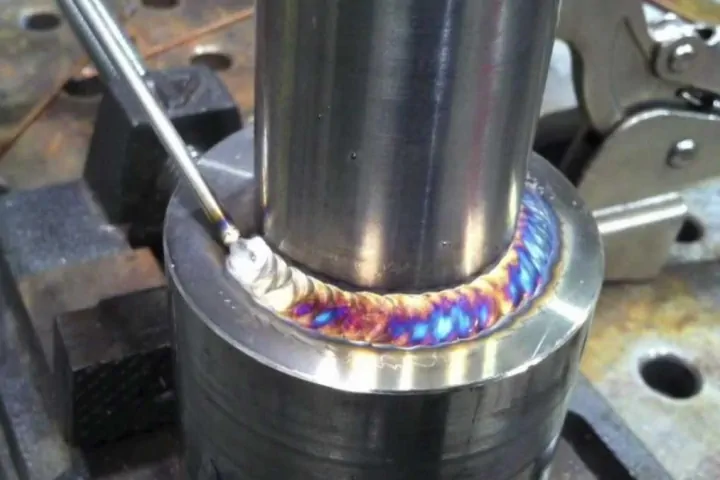
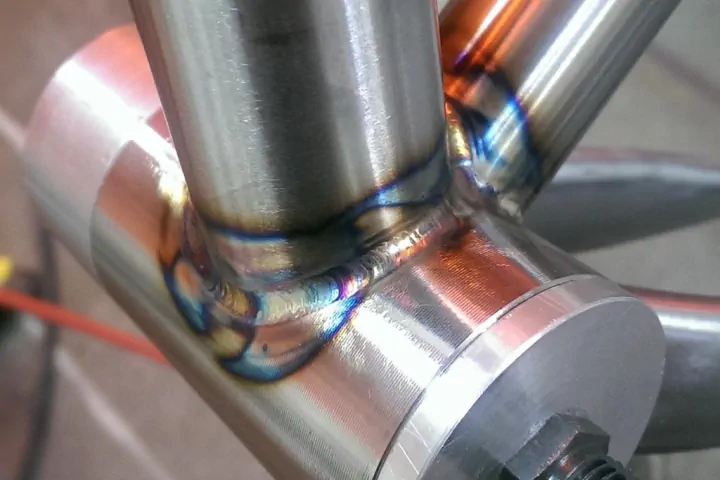
Conventional welding methods are not always suitable for joining parts made of stainless steel, copper, titanium, aluminum, and various non-ferrous metals and alloys. Experienced welders often use TIG welding for these applications. This is a demanding, time-consuming and specialized process.
TIG welding (argon arc welding) is performed in an inert argon-gas environment, which gives the process its name. Using argon to join two metals protects them against oxidation caused by contact with oxygen in the air. Because argon is 38% heavier than air, it displaces air from the welding zone, fills the working space and reliably isolates the molten metal from the atmosphere.
The welding process can be performed manually, semi-automatically or automatically. Welding modes are classified according to these methods and the type of electrode used. There are two types of electrodes: consumable and non-consumable. The latter includes tungsten electrodes, which can provide a strong and reliable joint between two metals, including dissimilar metals.


