

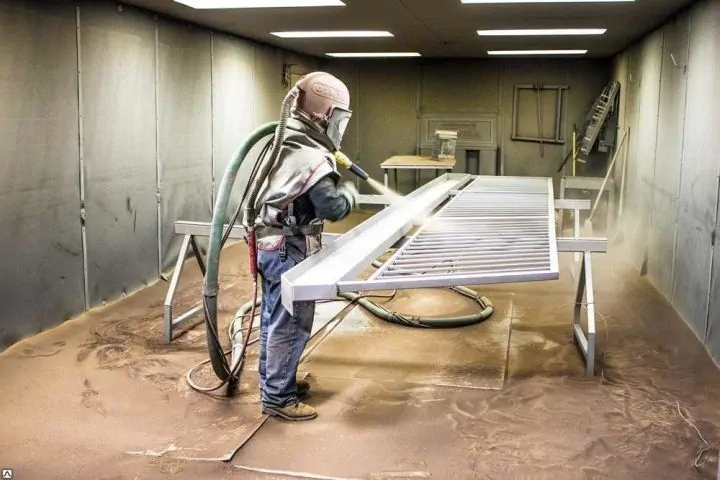
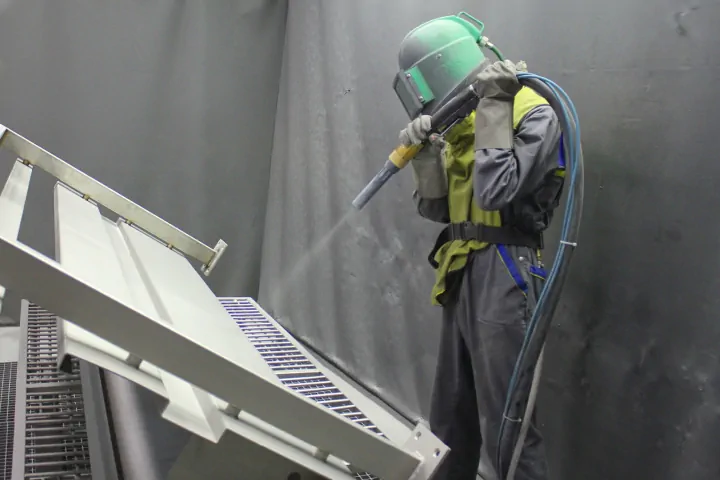
Metal sandblasting is a highly effective technology for removing contaminants, corrosion, molding-sand residue, and oil stains from product surfaces through cold abrasive cleaning. The equipment used for this purpose is also suitable for glass, stone, and other hard materials.
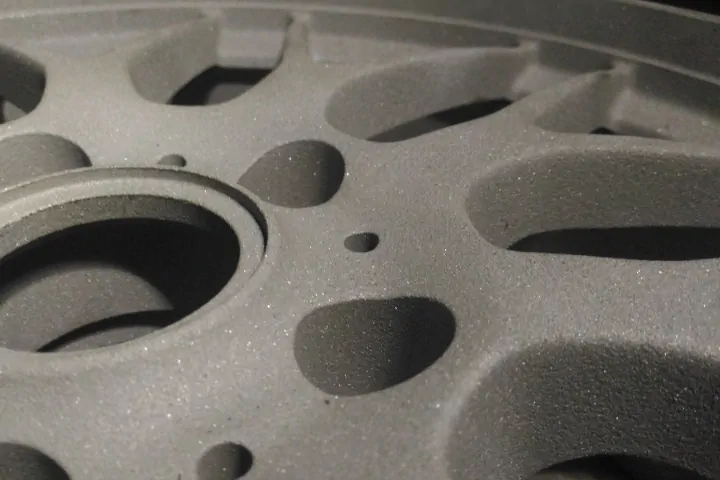
The process consists of treating a surface with an abrasive material, most often sand. Abrasive particles can create a rougher surface, improving the adhesion of coatings and extending their service life.
The following types of surface treatment are performed using sandblasting equipment:
- Light. Surface cleaning removes major areas of corrosion and traces of old paint.
- Medium. More thorough treatment leaves no more than 10% of minor rust traces.
- Deep. A high consumption of abrasive material provides the most thorough cleaning, leaving the metal surface completely clean.
After sandblasting, the treated metal surface is assigned one of four grades under the international standard: light blast cleaning (Sa 1), thorough cleaning without a reflective finish (Sa 1-2), near-white blast cleaning (Sa 2-2.5), and white metal blast cleaning (Sa 3).


